
Zero-Click News and AI Search: What it Means for Brands and Media

Author
Giles Peddy
Leadership
06.11.2026


See how we tackle today’s biggest PR and marketing challenges.
 Building brand awarenessChanging brand perceptionCreating a new categoryDeveloping a brand strategyEnter new marketsGaining market shareGenerating leadsLaunching a new offeringMeasuring a comms programReddit strategy & community amplificationRepositioning a brandAI Visibility & Search Discovery (AEO/GEO)
Discover the industries we serve – and why we’re so passionate about them. From B2B SaaS to consumer health and wellness, we have the expertise to drive ROI for your PR and marketing spend.

Check out our comprehensive range of services and how we do things differently.
Awards Program & Speakers BureausBrand StrategyConsumer Reviews ProgramContent CreationContent & Coverage AmplificationCorporate CommunicationEarned Media & StorytellingExecutive VisibilityGlobal Campaign CoordinationIntegrated MarketingInfluencer RelationsMeasurement, Insights, & AnalyticsPublic AffairsSocial MediaStakeholder EngagementStrategy Counsel
It’s a simple equation: clear insights + deep expertise + creative thinking = remarkable results. Our client case studies prove it.

Learn how SourceCode is uniquely prepared to address your specific communications goals.

Giles Peddy
06.11.2026
AI search is changing how brands earn visibility. For PR teams, success increasingly depends on authoritative media coverage, strong journalist relationships, and original thought leadership content that AI systems can cite and summarise.
What does the rise of AI search mean for newsrooms and PRs? The answer is, somewhat paradoxically: more human stories, written by humans, to be read by humans.
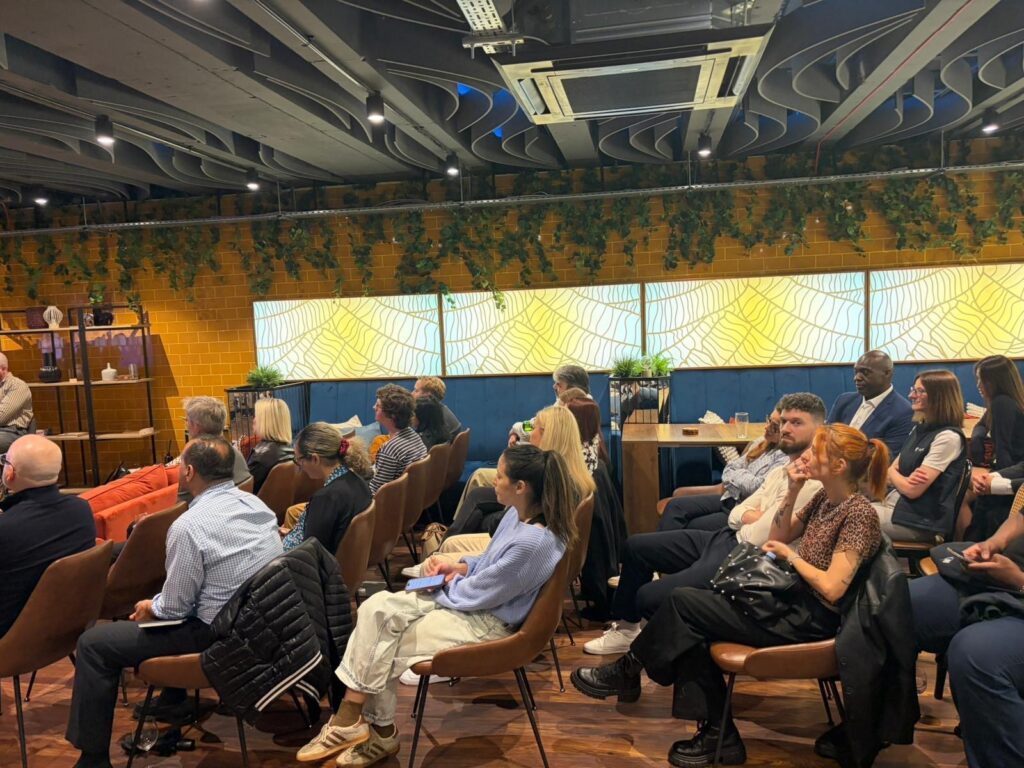
With traditional search clicks rapidly losing ground to AI summaries, tech journalists Saskia Koopman (City AM) and James Titcomb (The Telegraph) sat down with SourceCode’s Sam Shaw to debate the future of media.
For those who missed the panel event, or for those who attended and hoped for a recap, here’s a summary of how zero-click news is driving high-quality journalism and what that means for your communications strategy.

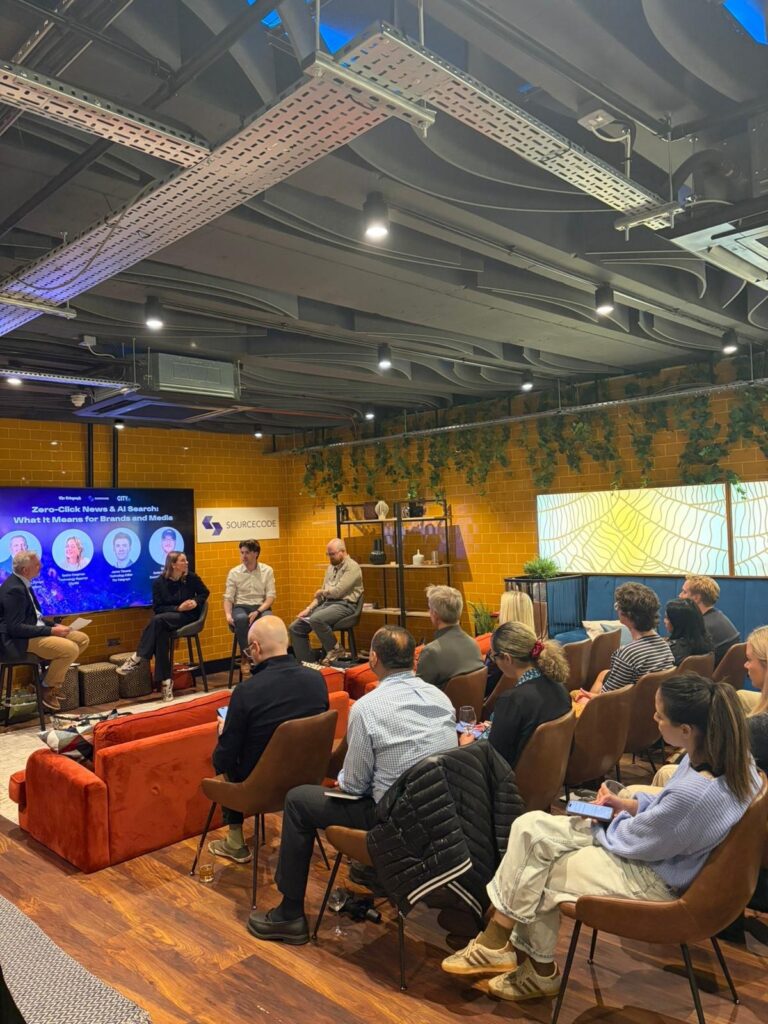
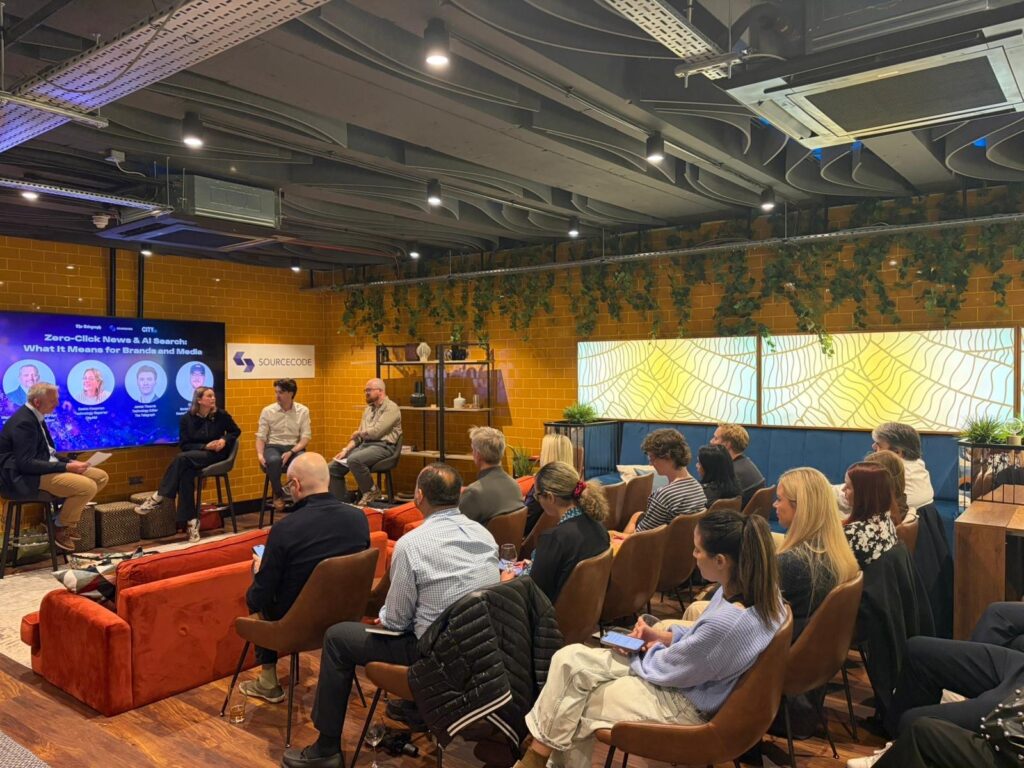
Newsrooms aren’t consciously changing the way they write to make their stories more discoverable by algorithms. But that doesn’t mean these stories aren’t ranking highly in AI summaries.
News reporting is undergoing a renaissance. In the face of AI slop, journalists are doubling down on quality by producing well-written articles that are supported by insightful quotes from tech industry experts.
Everyone wins. Readers get a better product, while news articles also tend to perform well in AI search. This is because algorithms favour articles that are authoritative and original.
In pushing back against AI slop, journalism is also increasingly about the personalities behind the by-line. Journalists regularly appear on podcasts, in newsletters, and on video, providing a human face to their stories. It’s a welcome tonic to digital platforms that are fast losing credibility and trust.
The decline of Google search volumes is the reset the publishing industry needed. Over the past 20 years, publishers got hooked on easy search inflows from Google. Often, this came at the cost of building strong relationships with their readers.
With the rise of zero-click search, there’s a huge opportunity for publications to reconnect with their readers and establish those direct relationships. It’s a change that will ultimately make the industry stronger.
There are also new commercial opportunities to be had with the AI platforms themselves. Online publishers and news organisations can now block their content from appearing in Google’s AI summaries in UK search results, putting them in a stronger position to negotiate content deals. Slowly but surely the industry is moving towards a commercial consensus that will work for all.
Appearing in AI search results is now imperative for businesses looking to improve AI visibility and digital brand authority. If your brand doesn’t show up, you can be sure that your competitor’s will.
However, PRs need to be careful about how they approach AEO. First, they should be very careful about using generative AI to optimise their content. Journalists know when a comment is AI generated and they simply will not use it. They may even stop trusting the PR or the brand they represent.
The best approach is to create an AEO strategy that fits with the brand’s business goals and which aligns with the requirements of the journalist and their publication. That means going back to basics with strong messaging, newsworthy angles, solid research, and strong media relationships.
The latter is particularly important. PRs should encourage executives to meet with key journalists regularly. Over time, these meetings will organically lead to coverage in the top-tier publications that rank highly in AI search summaries.
Meanwhile, when thinking about which angles to take, PRs should factor in that publications are increasingly on the lookout for stories, anecdotes, and narratives. Simply shipping another survey will not get the coverage brands need, unless supported by a genuinely interesting story.
Finally, brands should be wary of focusing solely on placing executive commentary on sites like LinkedIn and Medium. While there is a role for such coverage, a good write up in an unbiased publication known for high editorial standards is much more valuable. It builds credibility and authority and will therefore be much more likely to show up in AI summaries.

With the rise of zero-click search, there’s a huge opportunity for publications to reconnect with their readers and establish those direct relationships. It’s a change that will ultimately make the industry stronger.
AI is automating many areas of media and PR and it plays an important role in supporting research and administrative tasks that once took a long time to complete. Anyone who no longer needs to waste hours transcribing an interview can talk to this point.
In many industries there’s a fear that AI will replace people. As our roundtable participants made clear, however, this is manifestly not the case in media and PR. Rather, AI is elevating human storytelling and connection.
Brands that focus on creating high-quality content and building strong, long-term relationships with the journalists that matter most, will be well placed to thrive in the years ahead.