
Alternative media is getting more attention than ever, but can brands and PRs keep up?

Author
Sam Shaw
09.28.2026


See how we tackle today’s biggest PR and marketing challenges.
 Building brand awarenessChanging brand perceptionCreating a new categoryDeveloping a brand strategyEnter new marketsGaining market shareGenerating leadsLaunching a new offeringMeasuring a comms programReddit strategy & community amplificationRepositioning a brandAI Visibility & Search Discovery (AEO/GEO)
Discover the industries we serve – and why we’re so passionate about them. From B2B SaaS to consumer health and wellness, we have the expertise to drive ROI for your PR and marketing spend.

Check out our comprehensive range of services and how we do things differently.
Awards Program & Speakers BureausBrand StrategyConsumer Reviews ProgramContent CreationContent & Coverage AmplificationCorporate CommunicationEarned Media & StorytellingExecutive VisibilityGlobal Campaign CoordinationIntegrated MarketingInfluencer RelationsMeasurement, Insights, & AnalyticsPublic AffairsSocial MediaStakeholder EngagementStrategy Counsel
It’s a simple equation: clear insights + deep expertise + creative thinking = remarkable results. Our client case studies prove it.

Learn how SourceCode is uniquely prepared to address your specific communications goals.

Sam Shaw
09.28.2026
With a busy news agenda and reduced headcount, journalists are turning to alternative media channels to cover the stories that matter most to them. Brands need to change how they campaign to make full use of this emerging media landscape.
The lot of the modern day journalists isn’t always a happy one. Shrinking newsrooms and depleted budgets means journalists are often stretched to breaking point, with at least 3,434 journalism jobs cut across the UK and US in 2025. Those that remain have to deal with more news than ever. Global conflicts, climate change, political instability, AI disruption – you name it, nearly every week brings with it a raft of major news events that simply can’t be missed.
Brands already know that they need to up their game when it comes to targeting journalists to ensure that their pitch translates into coverage. What’s new is that as journalists struggle to cover all the stories they’d like to in their day jobs, they’re turning to alternative media as an additional outlet. That means brands have a completely new set of channels to target with their outreach.
News podcasts, long-form video content, and editorial newsletters are having a massive moment. Daily broadcasts are becoming unmissable content, morning briefings are becoming must-read inboxes, and weekly long-form video is taking the place of the time-honoured column and opinion piece. It’s reckoned that 34% of journalists independently publish news, commentary or other content under their own name outside of a traditional media organisation.
Welcome to the age of the creator journalist.
And it couldn’t have arrived at a better time. The way people consume the news is changing fast. There are now over 500,000 paid subscriptions to UK based Substacks – second only to the US, while 27% of UK adults now listen to at least one podcast a week.
For brands, this is all hugely exciting. While traditional media remains important, this all opens up entirely new ways to engage with audiences. But as with all new opportunities, there’s going to be a learning curve, and media relations/PR practices will need to change.
Success in this new world goes beyond simply adding a new “podcast” or “Substack” tab to your distribution lists. Brands can use alternative media to campaign in completely new and much more compelling ways.
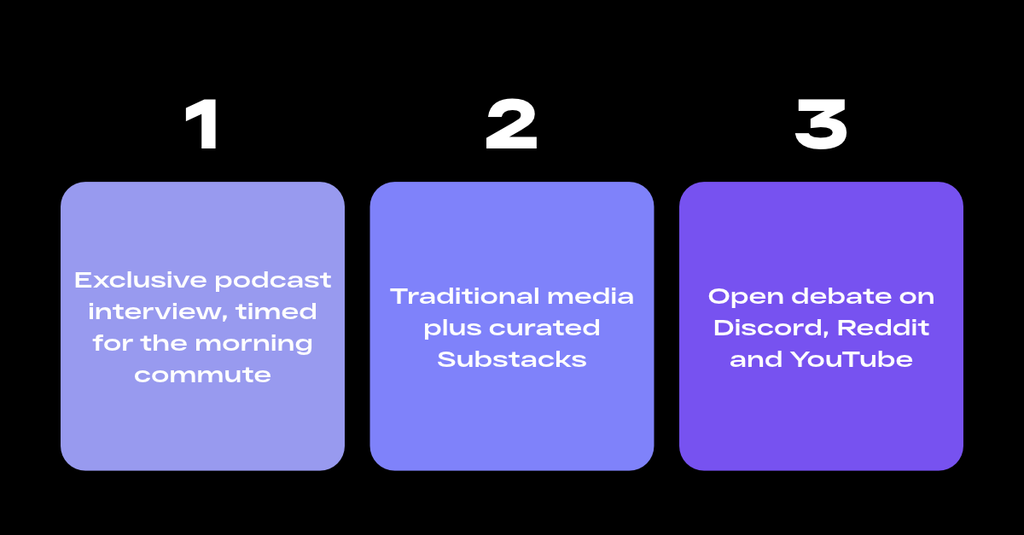
Take your typical news announcement as a case in point. Rather than issue the news via a press release, you can instead launch the news with an exclusive podcast interview timed to go out during the morning commute. From there, you could amplify the story both through traditional media relations as well as outreach to carefully curated Substacks, before opening the debate up to customers using Discord or Reddit communities, or relevant YouTube channels.
Of course, this is just scratching the surface of what’s possible. If you want to learn more, then I strongly recommend you join SourceCode UK’s upcoming event on the topic.
We’re bringing together three experts on the space – Martin Kimber, Former Head of Video & Audio at City A.M. where he was co-host of the Business As Usual podcast; Tom Bristow, Editor of The Morning Intelligence newsletter; and Kamal Ahmed, Executive Editorial Director of EMEA at Fortune and author of the Letter from London newsletter to discuss how brands can fit into this emerging media space.
Discover what’s driving the emergence of news podcasts, long-form video and editorial newsletters in the UK; what makes a story worth green-lighting as original video or audio content, rather than a standard news piece; and how that commissioning decision-making differs from traditional editorial judgement.
The event takes place at the SourceCode UK office in Farringdon on Tuesday 6th October between 1700-1800 and we hope to see you there.
Get in touch to book your place now.
News podcasts, long-form video and editorial newsletters, often run by journalists under their own name. They sit alongside traditional outlets rather than replacing them.
A journalist who publishes news, commentary or other content independently, under their own name, outside a traditional media organisation.
Newsrooms are shrinking while the volume of major news keeps rising. Journalists cannot cover every story they want to in their day jobs, so they use their own channels as an additional outlet.
Not by adding a “podcast” or “Substack” tab to a distribution list. Plan the campaign around these channels: launch news with an exclusive podcast interview, amplify it through traditional media and curated Substacks, then open the debate in communities like Discord, Reddit or relevant YouTube channels.
Yes. Alternative media adds new ways to reach audiences, but traditional media relations remain part of the mix.