
Why Independent PR Agencies Are Winning in the AI and Consolidation Era

Author
Greg Mondshein
Co-Founder
05.07.2026


See how we tackle today’s biggest PR and marketing challenges.
 Building brand awarenessChanging brand perceptionCreating a new categoryDeveloping a brand strategyEnter new marketsGaining market shareGenerating leadsLaunching a new offeringMeasuring a comms programReddit strategy & community amplificationRepositioning a brandAI Visibility & Search Discovery (AEO/GEO)
Discover the industries we serve – and why we’re so passionate about them. From B2B SaaS to consumer health and wellness, we have the expertise to drive ROI for your PR and marketing spend.

Check out our comprehensive range of services and how we do things differently.
Awards Program & Speakers BureausBrand StrategyConsumer Reviews ProgramContent CreationContent & Coverage AmplificationCorporate CommunicationEarned Media & StorytellingExecutive VisibilityGlobal Campaign CoordinationIntegrated MarketingInfluencer RelationsMeasurement, Insights, & AnalyticsPublic AffairsSocial MediaStakeholder EngagementStrategy Counsel
It’s a simple equation: clear insights + deep expertise + creative thinking = remarkable results. Our client case studies prove it.

Learn how SourceCode is uniquely prepared to address your specific communications goals.

Greg Mondshein
05.07.2026
As consolidation reshapes the communications industry, independent PR agencies are gaining a strategic advantage. CMOs are under pressure to drive measurable business growth, integrate AI into marketing operations, and move faster with fewer resources. That shift is creating new opportunities for agile, integrated communications firms that can connect PR, content, and business outcomes more effectively than traditional holding company models.
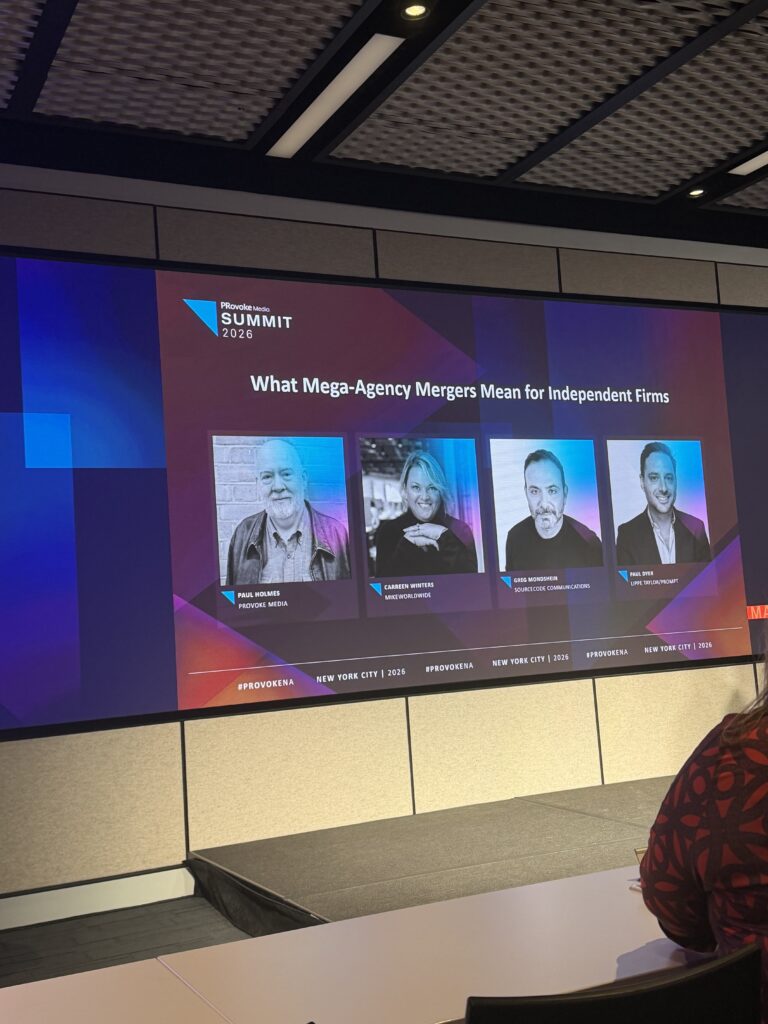
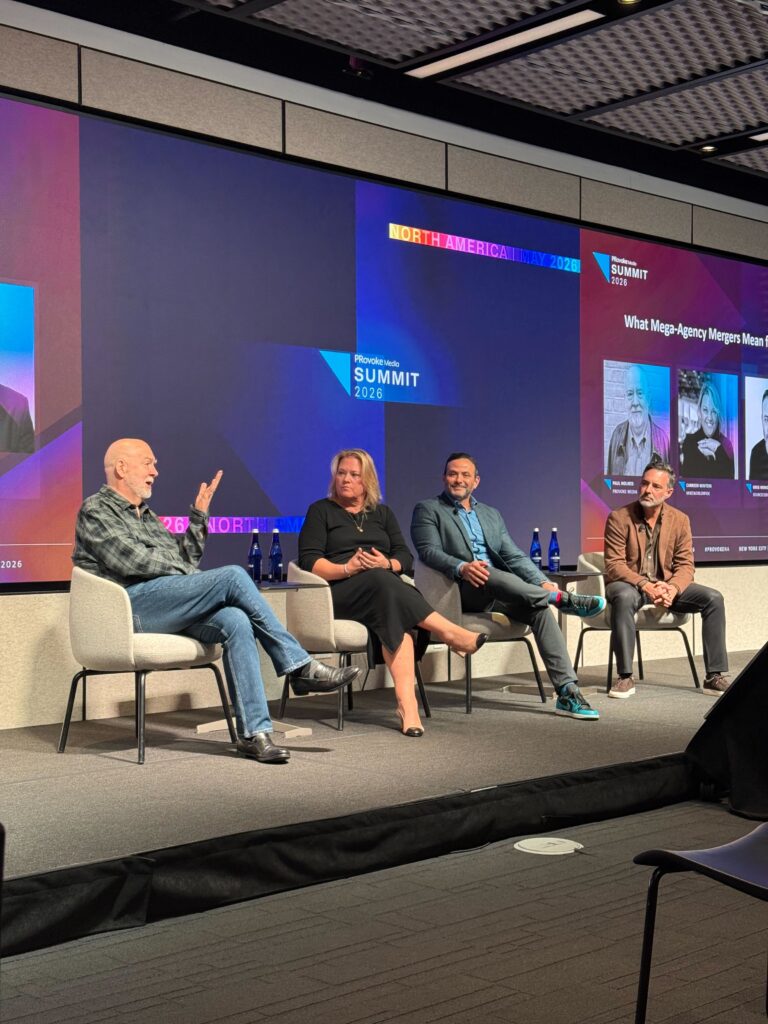
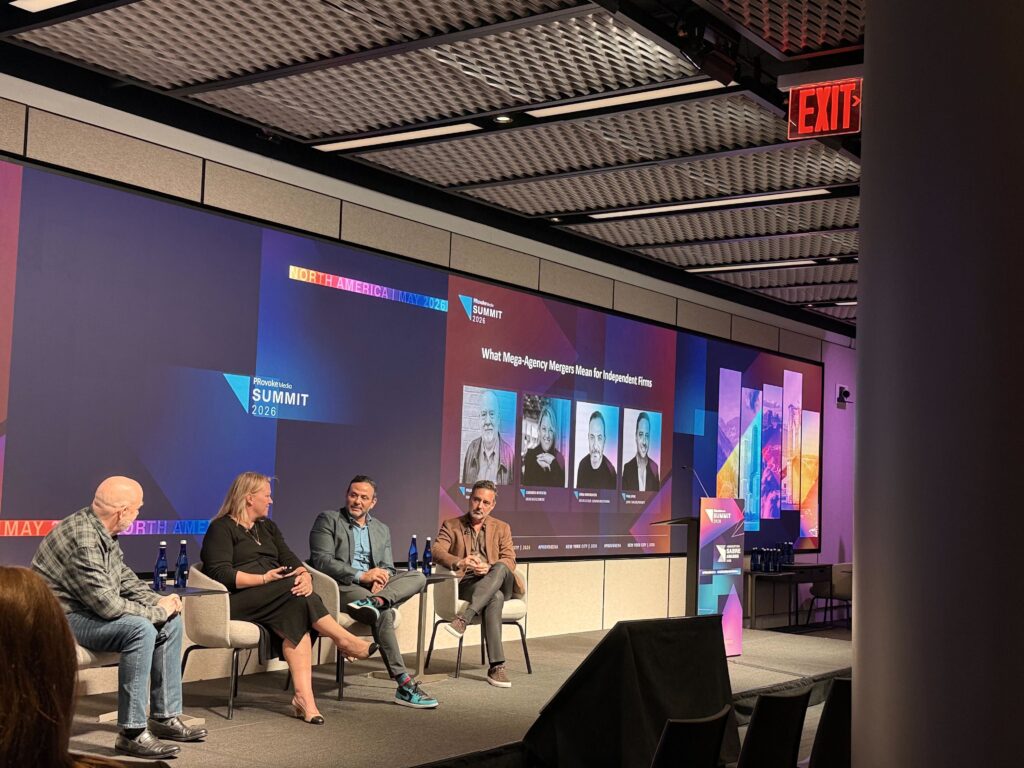
This week, I spoke on a panel at the PRovoke North American Summit about the future of independent agencies, industry consolidation, and AI’s impact on communications. While the headlines are dominated by mergers, restructures, and cost-cutting, the larger strategic shift becomes clearer when you zoom out.
Most of what we’re seeing right now is about financial engineering, not client impact. When holding companies merge brands, flatten org charts, and cut costs, they’re solving for margin pressure. Independent PR agencies operate differently. Without the same public-market pressures, they can prioritize investments that directly improve client outcomes, strategic execution, and service quality.
That distinction matters more than ever.
Independent PR agencies don’t have the pressure of shareholders and can focus on what is improving the work or the client experience. It’s clear, knowing (and being able to act on) where our bread is buttered leads to better investments and better client relationships. See our expanding budgets, scopes, and subsequent financial performance.
They are under intense pressure to drive growth with tighter budgets, prove ROI faster, integrate AI into workflows, connect communications to revenue outcomes, and move at the speed of culture and technology. As a result, many marketing leaders are reducing agency complexity and looking for fewer, more strategic partners.
The priority is no longer agency sprawl. It is operational clarity, speed, and measurable business value.
The advantage is not simply that they are smaller, it is that they are scrappier, more adaptive, and built for speed.
As Paul Holmes noted, the modern communications environment increasingly requires “alacrity” — the ability to move quickly, think clearly, and adapt in real time. That capability is becoming a defining competitive advantage for independent agencies.
Independent agencies are often:
With fewer approval layers and less organizational bureaucracy, independent firms are often able to make decisions faster, test ideas more rapidly, and respond to client needs with greater precision.
Clients don’t need a collection of beautifully branded services disconnected from measurable business outcomes. They increasingly want agency partners who can identify opportunities early, react quickly to shifting business realities, and integrate communications strategy directly into growth objectives.
Growth has become the defining challenge for modern CMOs.
Increasingly, communications agencies are expected to contribute directly to pipeline development, brand differentiation, demand generation, and market visibility.
That environment rewards agencies that can adapt quickly and execute across earned, owned, shared, and AI-enabled communications channels.
As my colleague Paul Dyer (CEO at /prompt) laid out in the kindest of terms (wink wink, nod nod), holding companies were built on media buying economics.
Today, that model is facing pressure from:
As that foundation weakens, everything around it gets strained. Consolidation is increasingly becoming a mechanism for preserving margins and operational efficiency.
Yes, the holdcos will invest more. But AI doesn’t just reward scale — it rewards clarity, speed, and judgment.
Increasingly, AI rewards:
AI compresses execution while elevating the importance of strategic thinking and editorial judgment.
That plays directly into the strengths of focused, integrated teams.
Importantly, becoming effective with AI inside an agency model does not necessarily require massive capital investment. In many cases, the competitive advantage comes from adaptability, workflow integration, and strategic application rather than sheer scale.
Scale used to mean advantage: buying power, global reach, resources. Today, many of those advantages are dissipating. Technology has leveled access. Customer data and insights are available everywhere. Talent is more distributed, and clients are recognizing that they get more, better, faster work with specialized, independent shops.
These are the agencies best equipped to solve the evolving challenges facing modern CMOs. We’re ready.